A Saudi work visa doesn't start with you but with the employer: a company registered in the Kingdom issues the visa through the official systems and authorises it to the Saudi mission. Then you complete your part in Türkiye: a valid passport, the employment contract, a medical exam from a hospital approved by the consulate, a criminal record certificate, and legalised certificates. The important change: Turkish documents are legalised with an apostille because Saudi Arabia joined the convention on 7 December 2022, while Syrian documents need traditional legalisation. After you arrive, the employer issues your iqama (residence permit).
Ads for a “work visa without a sponsor” or a “free visa” for large sums are everywhere. Working for anyone other than the employer who recruited you breaks the law and can end in fines, deportation and an entry ban. A legal visa comes from a real employer with an authenticated contract — the “right to work” can't be bought from a middleman.
Türkiye is home to hundreds of thousands of qualified Arabs, and we're often asked: “I've had a job offer in Riyadh — where do I start?” In this guide we explain the whole route: what the employer does in the Kingdom, what's needed from you in Türkiye, how to avoid the mistakes that most often delay files, and when the offer itself is a sign of fraud.
Where does a work visa start?
- 1A job offer and a contract
From a company registered in Saudi Arabia, with a clear profession and salary. Private-sector contracts are authenticated electronically through the Qiwa platform.
- 2The employer issues the visa
Through Qiwa for companies (or Musaned for domestic workers), then authorises it to the Saudi mission in your name or for your nationality and profession.
- 3Preparing your documents in Türkiye
Passport, photos, contract, legalised and translated certificates, criminal record certificate, and the medical exam from an approved centre.
- 4Professional verification or accreditation
For some professions and nationalities: accreditation from the relevant body or a verification programme before the visa is issued.
- 5Applying to the Saudi mission
In Türkiye, jurisdiction lies with the embassy in Ankara and the consulate general in Istanbul, through the channel and appointments in place when you apply.
- 6Travel and the iqama
You enter the Kingdom within the visa's validity, then the employer issues the iqama after the medical exam and fingerprinting there.
Before accepting the offer: how to check the employer
Ask for the company's official name, city and business, and make sure the contract is issued in its name, not a middleman's.
Profession, salary, allowances, working hours, leave and contract length in writing, matching what's on the visa.
Saudi labour law puts recruitment, iqama and work permit fees and renewals on the employer. Anyone asking you for the “price of the visa” is most likely breaking the rules.
Talk to the company's own HR department, not only to a middleman whose role you don't know.
The documents needed from you in Türkiye
| Document | Notes |
|---|---|
| Passport | Valid for long enough — ideally with long validity, since the iqama will be based on it |
| Personal photos | Recent, on a white background and to the required specifications |
| Employment contract or offer letter | Matching the visa details: profession, name and employer |
| Academic and professional certificates | Legalised (apostille for Turkish ones, consular legalisation for Syrian ones) and translated into Arabic |
| Criminal record certificate | From the official authority in your country of residence; in Türkiye it's obtained online, then apostilled and translated |
| Medical report | From a hospital or centre approved by the Saudi mission for work exams |
| Turkish residence permit | For non-Turks: a valid residence permit proving you live in Türkiye |
| Professional accreditation | If your profession requires it (healthcare, engineering, accounting…) |
The exact list varies with profession, nationality and the mission's instructions at the time of application, so we review it with you before you start.
Legalisation: apostille or consular?
This is where the most time is lost. The rule today:
| Where the document comes from | Method | Why |
|---|---|---|
| Issued in Türkiye (Turkish degree, Turkish criminal record, civil registry document) | Apostille from the competent Turkish authority, then a certified translation into Arabic | Türkiye and Saudi Arabia are both parties to the Apostille Convention, in force for Saudi Arabia since 7 December 2022 |
| Issued in Syria | Traditional consular legalisation depending on the type of document | Syria is not a party to the Apostille Convention |
| Issued in another country | Depends on that country's membership of the convention | We check each country individually |
Turkish and English documents usually need a certified translation into Arabic. We translate certificates, criminal records and family documents through our certified translation service, and put your file in the order the mission requires.
By your status in Türkiye
| Your status | What matters most to you |
|---|---|
| Turkish citizen | All your documents are Turkish, so they're apostilled and translated, and you don't need a residence permit |
| Arab resident with a Turkish permit (work, family, student, tourist) | A permit that stays valid throughout, and your home-country documents legalised according to that country's membership of the Apostille Convention |
| Syrian with a regular residence permit | Syrian certificates need traditional legalisation, Turkish documents (such as a Turkish degree or criminal record) an apostille |
| Holder of temporary protection only | Your situation needs assessing before you start, since a regular residence permit and a valid passport are the basis of the file |
| Your degree is from a Turkish university | A big advantage: an apostille from the Turkish authority, then translation, without a long chain of legalisations |
Professional verification and accreditation
Doctors, nurses, pharmacists and technicians need classification and registration with the Saudi Commission for Health Specialties, which may start before you travel.
Professional accreditation with the Saudi Council of Engineers is a condition for practising engineering.
Other professions have their own professional bodies and accreditation requirements.
For some professions and nationalities there are programmes that verify qualifications and skills before the visa is issued, requested by the employer depending on the profession.
The medical exam and the criminal record certificate
The medical exam for a work visa is done at a hospital or centre approved by the Saudi mission in Türkiye, and its report is part of the file. Results for some infectious diseases can prevent the visa being issued. After arrival, another exam is done in the Kingdom as part of the iqama process.
The criminal record certificate is issued by the official authority in Türkiye (for those living here) and may also be required from your home country depending on the case. It is apostilled and translated. Watch the date: some authorities require a recently issued one.
A realistic timeline
| Stage | Depends on | What speeds it up |
|---|---|---|
| Issuing and authorising the visa | The employer | The profession and nationality being available in the company's visa quota |
| Legalising and translating documents | You | Starting as soon as you accept the offer, not after the visa is issued |
| Professional accreditation or verification | You and the relevant body | Having certificates and experience letters ready in advance |
| Medical exam | You and the approved centre | Booking early and following the fasting and test instructions |
| Submitting the file and the visa stamp | The Saudi mission | A complete, well-ordered file the first time |
| Travel and the iqama | The employer in the Kingdom | Carrying all your original documents |
Tips by profession
Start the Saudi Commission for Health Specialties procedures early, and bring experience certificates and licensing records from your previous employers, translated and legalised.
Accreditation with the Saudi Council of Engineers needs your legalised degree and sometimes proof of experience, so prepare them before you travel.
Teachers need their certificates legalised, and the employer may ask for an equivalency or evaluation of the qualification under Saudi education regulations.
A foreign driving licence is exchanged or a Saudi licence applied for after arrival under the traffic rules, and some technical trades involve skills tests.
Work and visit visa types: don't mix them up
| Type | Purpose | Note |
|---|---|---|
| Permanent work visa | Work under contract with an iqama | Issued by the employer, and becomes an iqama after arrival |
| Temporary or seasonal work visa | Work for a set period (such as the seasons) | Special conditions and durations set by the system |
| Domestic workers | Private driver, housekeeper… | Through the Musaned platform |
| Business visit | Meetings, exhibitions and short assignments | Does not allow work — covered in our business visit guide |
| Tourist or visit | Tourism or visiting | Working on it is a violation |
Cases we see often
Composite examples based on questions we receive, not the stories of specific clients.
His degree is Turkish, so it's easily apostilled and translated; his Syrian secondary-school certificate, if requested, needs traditional legalisation. What matters most: a valid Turkish residence permit and accreditation with the Saudi Council of Engineers.
She starts the Saudi Commission for Health Specialties procedures early and brings her experience certificates from the hospitals she worked at in Egypt and Türkiye, translated and legalised according to where they were issued.
All his documents are Turkish, so they're apostilled; he does the medical exam at an approved centre, enters on the visa, and the employer issues his iqama.
His Jordanian certificates need checking for the right legalisation method according to Jordan's membership of the convention at the time of application, and his criminal record may be requested from both Türkiye and Jordan.
After arrival: the iqama and your first weeks in the Kingdom
- 1Entry
You enter on the work visa within its validity, with the contract and original documents.
- 2Medical exam and fingerprints
A medical exam and fingerprinting in the Kingdom as part of the iqama process.
- 3Issuing the iqama
The employer issues it, and it becomes your ID in the Kingdom.
- 4Digital services
An Absher account for government services, a bank account and a phone SIM.
- 5Family
Once you're settled, the family visit visa or family recruitment follows, depending on your profession and the rules. Read our family visit guide.
Terms you'll hear along the way
| Term | What it means in short |
|---|---|
| Qiwa | The platform companies use to manage worker affairs: visas, contracts and work permits |
| Musaned | The platform for recruiting domestic workers |
| Authorisation (tafweed) | The employer's permission for the Saudi mission to issue the visa to you or to your nationality and profession |
| Apostille | An international legalisation stamp that replaces consular legalisation between member states of the convention |
| Iqama (resident ID) | The document proving your legal residence in the Kingdom, issued by the employer |
| Absher | The government services platform for individuals in the Kingdom: iqama, exit and re-entry and more |
| Work permit | The permit to practise your work, linked to your iqama and profession |
Premium Residency: the legal alternative to “no sponsor”
If what you're looking for is to live in the Kingdom without being tied to one employer, the legal route is Premium Residency, with categories aimed at exceptional talent, gifted individuals, entrepreneurs, investors and property owners, each with its own conditions and requirements. It isn't a “free visa” bought from a middleman, but an official application assessed against the conditions.
Your contract and your rights
Make sure the contract states
- A job title that matches the visa
- Basic salary and allowances listed separately
- Working hours and annual leave
- The contract term and how it's renewed or ended
- Housing, transport and medical insurance if included
Watch out for
- A job title different from your actual work
- A verbal salary that isn't written down
- No mention of medical insurance
- Penalty clauses you don't understand
- A contract in a language you don't understand, with no translation
An electronically authenticated contract protects you: profession, salary, allowances and leave are in writing. The reforms the Kingdom launched in 2021 to improve the contractual relationship allow expatriate private-sector workers job mobility and exit and re-entry under conditions set by the system. Read your contract before you travel and keep a copy.
Common reasons for delays or refusal
What speeds up your file
- A real employer with an authenticated contract
- Documents legalised and translated before applying
- A medical exam from an approved centre only
- Matching details across passport, visa and contract
- A valid Turkish residence permit for non-Turks
What delays or stops it
- A profession on the visa that doesn't match the degree
- Documents not legalised, or legalised the wrong way
- An old criminal record certificate
- An exam from an unapproved centre
- Dealing with a middleman selling “free visas”
What to take on the day you fly
Carry the originals of the documents whose copies you submitted: legalised certificates, the contract, the criminal record certificate and the medical report, plus paper and digital copies. You'll need them for the iqama and professional accreditation after arrival, and they can be hard to obtain again once you're in the Kingdom. It's also wise to bring experience certificates and reference letters from previous jobs, translated, as some professional bodies ask for them.
If the file is refused or returned
Don't start from scratch before you know the reason. Ask the employer and the mission why it was returned: a missing document, legalisation done the wrong way, a profession that doesn't match the qualification, or a medical result. Most cases are fixed by completing the document or correcting the data, not by a whole new application. If the reason is a medical result, the decision lies with the health authorities, and no middleman or “connection” can change it.
How we help
Alwan is a licensed travel agency in Istanbul (Group A, licence no. 9151) with a dedicated line for Saudi and Gulf visas. We don't sell work visas or jobs; once your employer issues the visa, we help you prepare your file in Türkiye: translating documents, pointing you to the legalisation authorities and approved medical centres, putting the file in order, and then booking your flight and a hotel for your first days in the Kingdom.
Ask about your Saudi work visa file on WhatsAppUseful guides: Saudi visa types · Business visit visa · Family visit visa · Certified translation · Saudi and Gulf visa service
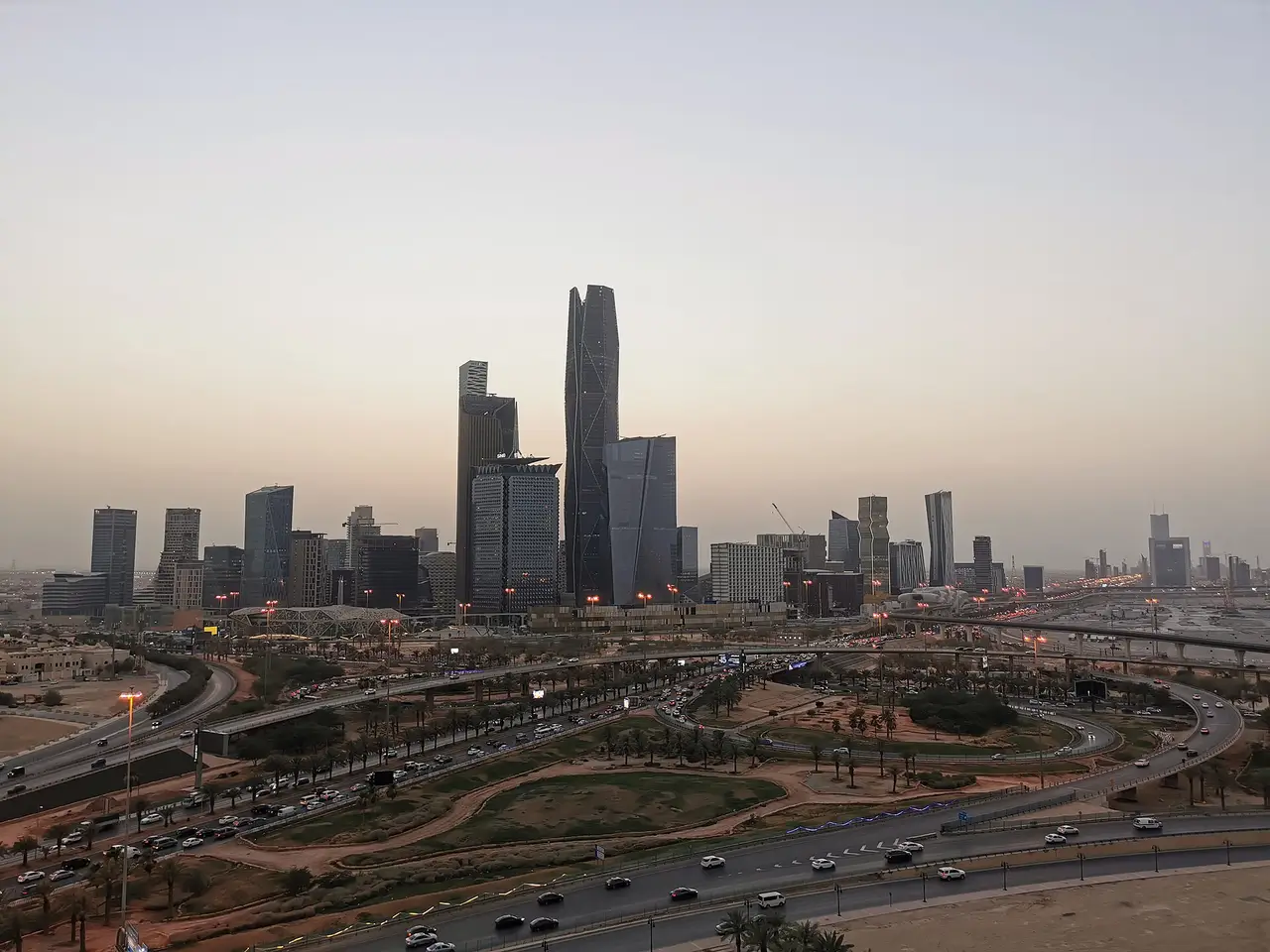
Official source for Apostille membership: the HCCH status table for the Convention Abolishing the Requirement of Legalisation for Foreign Public Documents. Procedures and lists change with the Saudi mission's instructions; we check them when preparing your file. Cover photo: King Abdullah Financial District in Riyadh (Ahmed, CC BY-SA 4.0) via Wikimedia Commons.
Frequently asked questions
Can I apply for a Saudi work visa myself?
No. A work visa starts with an employer registered in the Kingdom, who issues it through the official systems (Qiwa for companies, Musaned for domestic workers) and authorises it in your name or for your nationality and profession. You then complete your file in Türkiye with the embassy or consulate through the approved channel.
Is there a Saudi work visa without a sponsor?
What's marketed as a “free visa” or a “visa without a sponsor” to work for anyone is not a legal route, and working for someone other than your employer is a violation. The legal way to live there without an employer is Premium Residency, with its own categories and conditions — or having a real employer.
Do I need to legalise my Turkish certificates?
Yes, but more easily than before: Saudi Arabia joined the Apostille Convention, in force there since 7 December 2022, and Türkiye is a member, so documents issued in Türkiye are apostilled by the competent Turkish authority and then given a certified translation.
What about Syrian certificates?
Syria is not a party to the Apostille Convention, so documents issued there need consular legalisation the traditional way. We tell you which authority is required depending on the type of document and where it was issued.
Where do I do the medical exam?
At a hospital or centre approved by the Saudi mission in Türkiye for work-visa exams — not just any hospital. A second exam is done in the Kingdom after arrival as part of the iqama process.
How long does a work visa take?
It depends on how quickly the employer issues and authorises the visa, and on your documents being complete and any professional verification. Your part in Türkiye goes faster the earlier your documents are legalised and translated.
Is the work visa guaranteed?
No visa is guaranteed — the Saudi mission decides. But a correct file from a real employer, with legalised documents and a medical exam from an approved centre, greatly reduces the chance of delays and refusals.
Can I bring my family once I have the iqama?
Yes, subject to conditions related to your profession, salary and the family recruitment rules, or through the family visit visa. We explain the right option once your iqama is issued.
Do I pay the work visa fees?
Saudi labour law puts recruitment, iqama and work permit fees and their renewals on the employer. You may cover the cost of your personal documents such as translation, legalisation and the medical exam, but be wary of anyone asking you to pay for the “visa” itself.
Do I also need a criminal record certificate from Syria or my home country?
It depends on the mission's instructions, your profession and how long you've lived in Türkiye. It is usually requested from your current country of residence, and in some cases from your home country too. We review this with you before starting so you're not held up by a document that's hard to obtain.
What do I do if my file is returned?
First find out the reason from the employer and the mission: a missing document, the wrong legalisation, or a profession that doesn't match. Most cases are fixed by completing the document or correcting the data, without starting from scratch.
When must I enter the Kingdom after the work visa is issued?
Within the validity printed on the visa. Don't delay travel after it's issued, and if something holds you up, tell the employer immediately, because expiry means new procedures.
Can I change my profession after arriving?
Changing the profession on the iqama is done through the employer under the regulations and may need new professional accreditation. It's best for the profession on the visa to match your actual job from the start.
Is the medical exam in Türkiye enough?
The medical report from a centre approved by the Saudi mission in Türkiye is part of the visa file, and another exam follows in the Kingdom after arrival as part of the iqama process, so one doesn't replace the other.
What if my degree is from a Turkish university?
That's an advantage: the Turkish document is apostilled by the competent Turkish authority and then translated into Arabic, with no long chain of consular legalisations, because both Türkiye and Saudi Arabia are parties to the Apostille Convention.
Can I work in Saudi Arabia on a visit visa and convert it?
Working on a visit or tourist visa is a violation. The legal route is for the employer to issue you a work visa and for you to enter on it, or to follow what the system allows in special cases under the authorities' instructions.